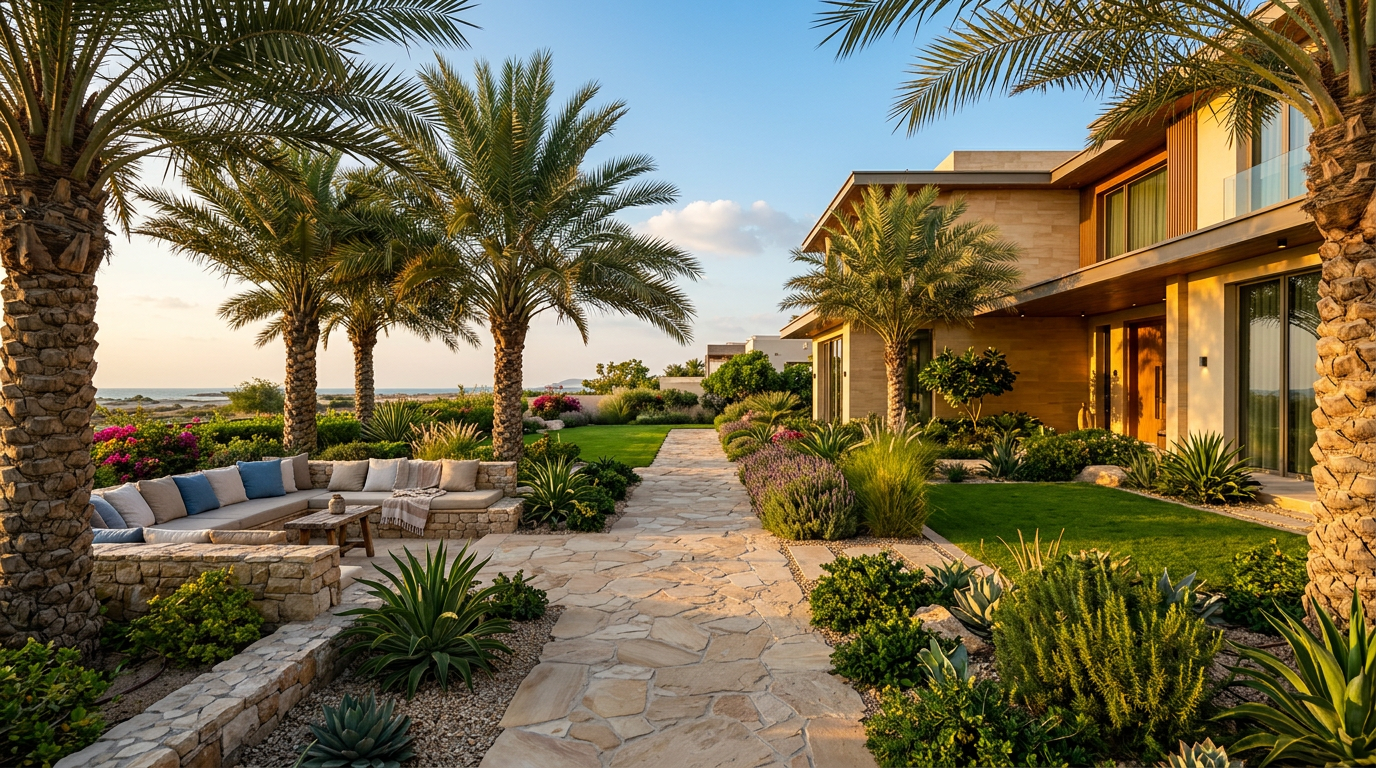

A new garden looks its best on handover day. Whether it still looks that way two years later depends far less on the original design than on what happens after the contractor leaves. In Bahrain's climate, with long hot summers, high humidity, salty air and strong winds, a landscape that is not looked after on a plan can decline faster than owners expect. Plants get stressed, irrigation drifts out of adjustment, lawns thin out and water bills creep up.
The good news is that good landscape maintenance in Bahrain is not mysterious. It is a rhythm of regular, well-timed tasks. This guide explains what those tasks are, how they change through the year, and what to look for when you decide between handling maintenance in-house or appointing a specialist contractor.
Why landscape maintenance matters more in the Gulf
In a temperate country, a neglected garden often survives on rainfall. In Bahrain it rarely does. Almost everything green in a villa garden, a school ground or a commercial compound depends on an irrigation system, and that system depends on someone checking it.
Regular maintenance does four jobs at once:
- Protects your investment. Trees, shrubs and lawns are expensive to establish. Replacing dead plants costs more than keeping healthy ones healthy.
- Controls water use. A blocked emitter, a broken sprinkler head or a controller running at the wrong time can waste water for weeks before anyone notices.
- Keeps the property safe and presentable. Overgrown branches, uneven paving edges and bare patches affect first impressions, and in public or commercial areas, safety.
- Extends the life of hard features. Paths, edging, shade structures and fences last longer when planting is kept off them and drainage stays clear.
What a good maintenance programme covers
Most professional programmes combine a set of recurring tasks. The exact mix depends on the site, but a complete scope usually includes:
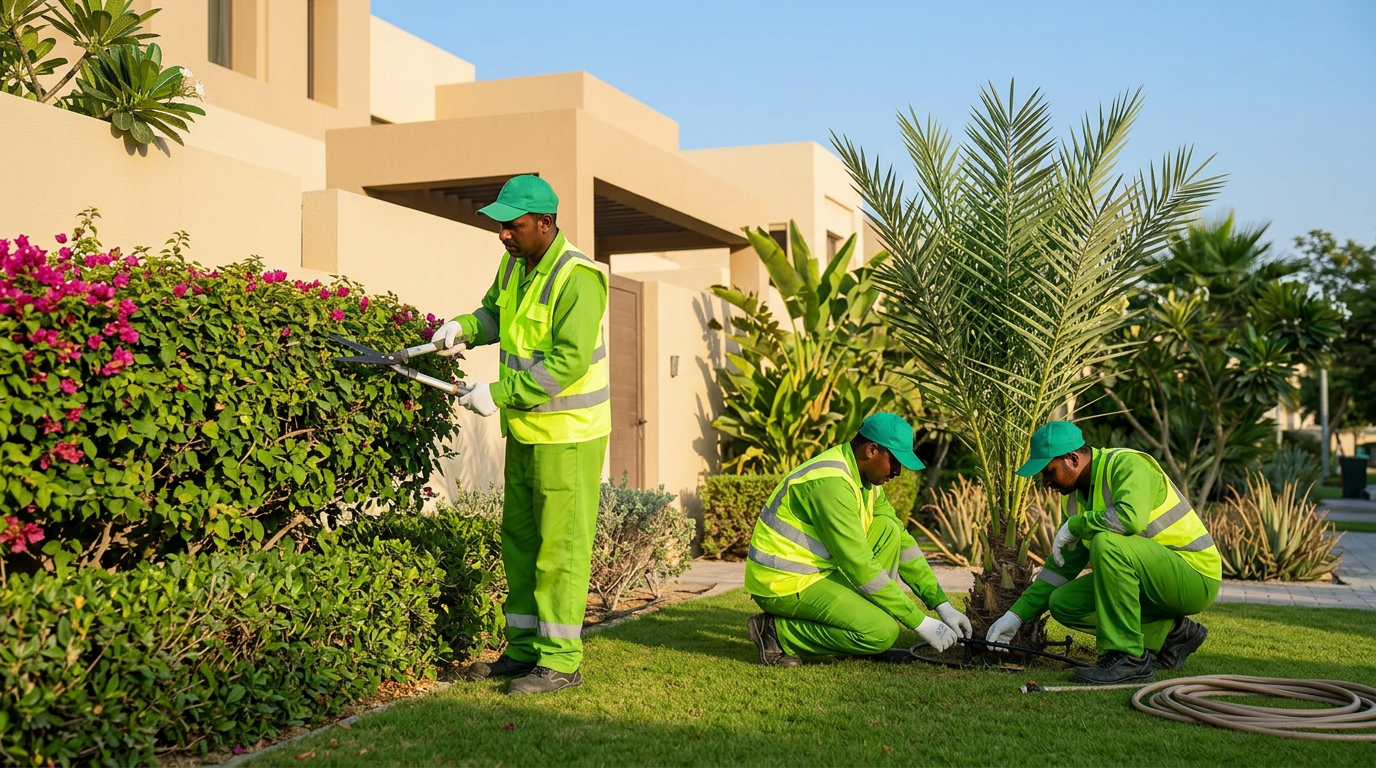
- Irrigation inspection and adjustment. Checking controllers, valves, drip lines, emitters and sprinkler heads, flushing lines, repairing leaks and adjusting run times to the season.
- Pruning and shaping. Trimming hedges, lifting tree canopies, removing dead wood and keeping plants clear of walls, lights, signs and walkways.
- Lawn care. Mowing, edging, aeration, top dressing and overseeding where a natural lawn is used.
- Feeding and soil care. Fertiliser and soil conditioner applications matched to plant type and season, plus mulching to reduce evaporation.
- Pest and disease monitoring. Spotting early signs of insects, fungal problems or nutrient deficiency before they spread.
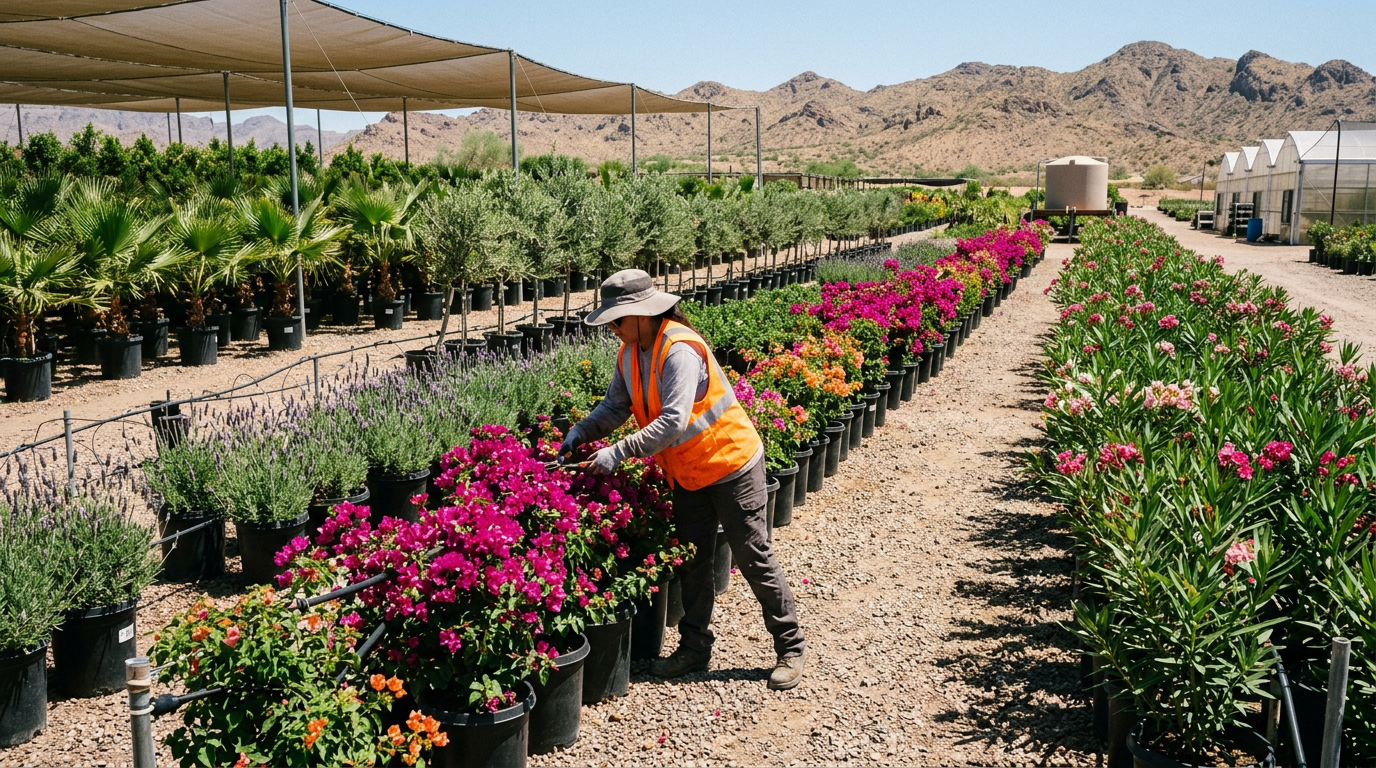
- Replacement planting. Replacing failed plants with species suited to local conditions, ideally sourced from a nursery that grows for the Gulf climate.
- General tidiness. Removing green waste, clearing drains and keeping paved areas and edges clean.
A seasonal landscape maintenance calendar for Bahrain
Plants do not need the same care in August as they do in January. Adjusting the programme through the year is one of the clearest differences between routine upkeep and well-managed maintenance. Treat the following as a general guide; the right timing for your site depends on its plants, exposure and irrigation design.
Summer (roughly June to September): protect and conserve
Summer is about helping plants survive, not pushing growth.
- Run irrigation early in the morning or late at night to reduce evaporation.
- Check emitters and sprinkler heads more often, because heat and sand can block them quickly.
- Avoid heavy pruning, which exposes stems and leaves to sun damage.
- Keep mulch topped up around trees and shrubs to hold moisture in the soil.
- Watch lawns closely. Natural turf is the first thing to show heat and water stress.
Autumn (roughly October to November): recover and plant
As temperatures ease, gardens come back to life.
- This is a favourable window for planting new trees, shrubs and groundcovers, because they establish more easily in milder weather.
- Feed lawns and shrubs to support recovery after summer.
- Review irrigation run times and reduce them as temperatures fall.
- Carry out corrective pruning and remove plants that did not survive the summer.
Winter (roughly December to February): shape and renew
Cooler conditions suit structural work.
- Prune trees and larger shrubs while growth is slower.
- Aerate and top-dress lawns and repair thin patches.
- Check hard landscape elements such as edging, paving and drainage for wear.
- Plan any redesign or upgrade works for the coming year.
Spring (roughly March to May): grow and prepare
Spring is when plants grow fastest and when you prepare for the heat ahead.
- Feed planting to support strong growth before summer.
- Service the irrigation system fully, replacing worn parts and re-adjusting zones.
- Refresh mulch and edge beds.
- Check shade structures and fabric canopies for wear ahead of the high-sun season.
Common maintenance problems and what causes them
| Symptom | Likely cause | What to check |
|---|---|---|
| Yellowing leaves | Overwatering, poor drainage or nutrient deficiency | Run times, soil moisture, feeding schedule |
| Brown or crispy lawn patches | Blocked or misaligned sprinklers, heat stress | Sprinkler coverage, nozzle condition, water pressure |
| Wet, boggy patches | Leaking pipe or stuck valve | Zone valves, joints, drip line connections |
| Plants wilting despite watering | Roots not receiving water, salt build-up | Emitter placement, soil quality, flushing |
| Leaning or damaged trees | Wind exposure, poor staking, root problems | Staking, canopy balance, root zone |
| Weeds and bare soil | Missing mulch, thin planting | Mulch depth, replacement planting |
Many of these problems start small and look minor. A routine inspection catches them early, which is usually the cheapest time to fix them.
In-house team or maintenance contractor?
Owners of a single villa may be happy to rely on a gardener. For larger properties, compounds, schools, public parks and commercial sites, there are good reasons to appoint a specialist contractor:
- Scope and schedule in writing. You know what is done, how often and to what standard.
- Technical skills in one team. Horticulture, irrigation repair, pest management and equipment are covered together.
- Equipment and materials. Specialist machinery, replacement stock and a plant supply chain are already in place.
- Accountability. Quality systems and reporting give you a clear view of progress.
When comparing proposals, ask these questions:
- What exactly is included in the scope, and how often is each task carried out?
- Who inspects and adjusts the irrigation system, and how are faults reported?
- How are replacement plants supplied, and are they suited to local conditions?
- How is the work supervised and documented?
- Does the contractor have experience of sites like yours?
How GFSS looks after Bahrain landscapes
Gulf Fencing & Specialist Surfacing has been working in the Kingdom of Bahrain since 1979, and maintenance sits alongside our design, irrigation and construction work. Our maintenance projects include private villas in Jasra and Awali, as well as landscaping and irrigation maintenance at Bahrain International Airport. Because we are involved in landscaping, irrigation installation and plant supply, our maintenance teams understand how each part of the system should perform. Our quality, environmental and safety management systems are certified to ISO 9001, ISO 14001 and ISO 45001.
If you are planning a new landscape, a handover or an upgrade, we can also help you set up a maintenance scope from the start, so the garden is designed with upkeep in mind.
Plan your landscape maintenance with GFSS
A well-kept landscape stays attractive, uses water sensibly and protects the money invested in it. Whether you manage a villa, a compound, a school or a commercial property, a seasonal maintenance plan makes the difference. Talk to the GFSS team about a maintenance programme for your property: visit the contact page or explore our landscaping and irrigation services.
Frequently Asked Questions
How often should a garden in Bahrain be maintained?
Most villa gardens benefit from a regular visit, typically weekly, with a deeper seasonal service several times a year. Commercial and public sites usually need a more frequent schedule. The right frequency depends on the size of the site, the type of planting and how it is used.
When is the best time to plant in Bahrain?
Cooler months, particularly autumn and late winter, are generally more favourable because plants establish with less heat stress. Your landscaper can advise on timing for specific species.
Does artificial grass need maintenance?
Yes, though less than natural turf. It still needs regular brushing, cleaning of debris and pet waste, and checks of edges and joints.
How can I reduce water use in my garden?
Use drip irrigation where suitable, water at cooler times of day, keep mulch in place, choose drought-tolerant plants and have your irrigation system inspected regularly for leaks and blockages. Our guide to drip and sprinkler irrigation explains the options in more detail.
What should a landscape maintenance contract include?
A clear scope of tasks, visit frequency, irrigation inspection, pruning, lawn care, pest monitoring, replacement planting and reporting. Ask for these in writing before you sign.
Have a project in mind?
Our team is ready to help with landscaping, fencing, irrigation, and specialized surfacing across the Kingdom of Bahrain.
Contact Us