

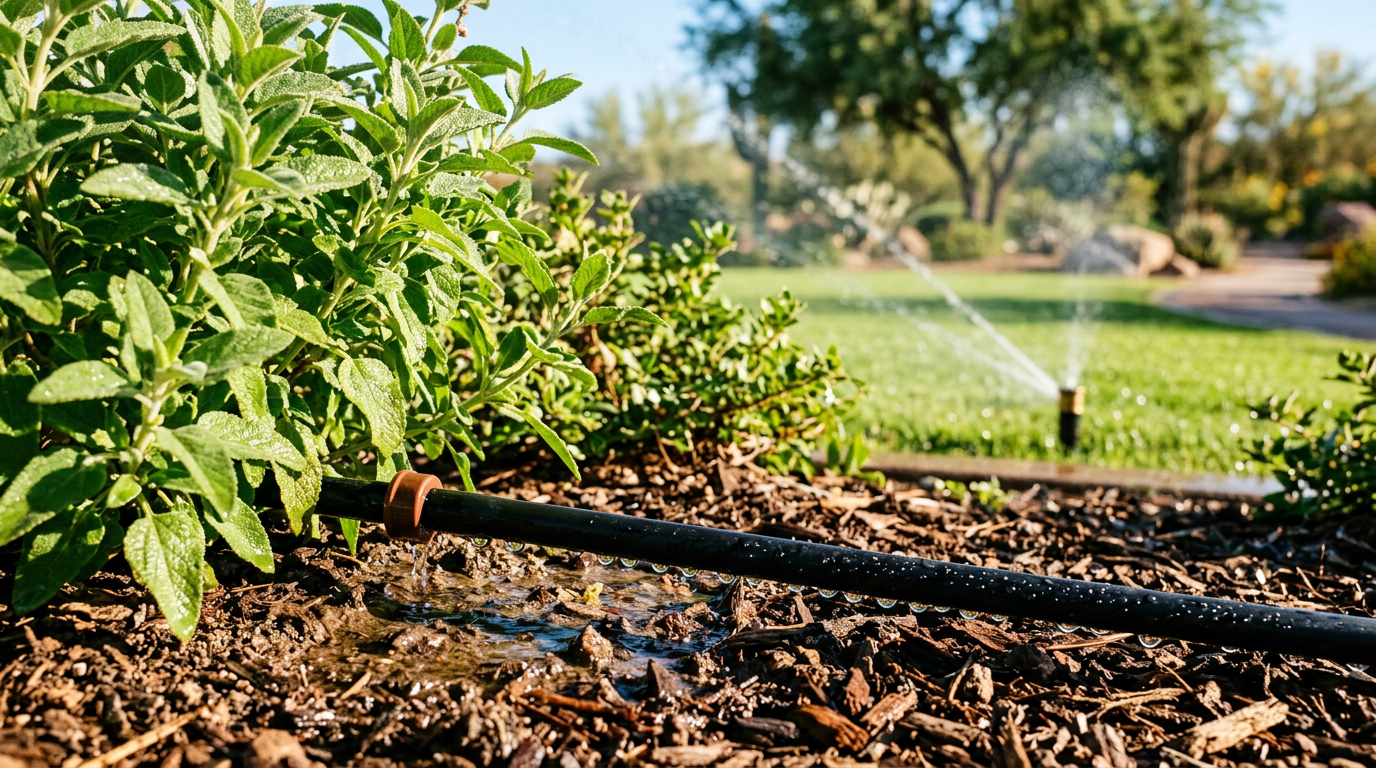
A healthy garden does not need every plant to receive water in the same way. In Bahrain’s hot, dry periods, a system that waters the wrong places or runs at the wrong time can waste water while leaving roots stressed. Drip and sprinkler irrigation can both be useful; the better choice depends on the plants, layout, soil, exposure and maintenance plan.
Understand the two approaches
Drip irrigation delivers water slowly through emitters close to the root zone. It is often a practical option for shrubs, trees, hedges and planting beds, especially where individual plants or rows can be served by a well-planned network. It can reduce water landing on paths and leaves, but only if the system is laid out correctly and emitters remain clear and functional.
Sprinklers distribute water over a broader area. They can be suitable for lawn and other spaces that need relatively even coverage. Their effectiveness depends on correct head spacing and pressure, and on operating conditions that do not carry the spray away from the target. Poorly aligned or blocked heads can create dry patches, overspray or runoff.
An automatic sprinkler system is not automatically efficient just because it has a timer. Automation is most useful when schedules match plant needs and are checked as weather and seasons change. Sensors can support decision-making, but they do not replace inspection: a rain or moisture sensor positioned poorly may not reflect conditions across the whole site. Confirm what the controller measures, whether settings can be adjusted by zone and who is responsible for seasonal changes. A system that nobody knows how to operate is difficult to optimise, so include a brief handover for the property team.
Quick comparison: drip or sprinkler?
| Consideration | Drip irrigation | Sprinkler irrigation |
|---|---|---|
| Typical fit | Trees, shrubs, hedges and planting beds | Lawn and broad planted areas needing even coverage |
| Water placement | Near selected plants and roots | Distributed across a wider surface |
| Common checks | Filters, emitters, tubing, leaks and flush points | Spray pattern, head alignment, pressure and overspray |
| Main design risk | Uneven output or clogged emitters go unnoticed | Wind drift, poor overlap or watering hard surfaces |
| Useful design choice | Group plants with comparable water needs | Match heads and zones to area size and shape |
These are general planning distinctions, not a universal prescription. A mixed garden may need both approaches in separate zones.
Choose by garden zone, not by one whole-site rule
Start by separating the landscape into areas with similar water requirements. Trees, shrubs, lawn, containers and seasonal beds may need different delivery and schedules. A sun-exposed lawn beside a shaded hedge should not automatically be treated as one uniform zone. The same applies to properties with different soil or drainage conditions across the site.
For a villa, drip lines can serve planting beds while sprinklers cover a purposeful lawn. For a school or facility, consider operating hours, access, play and event schedules, visibility of heads and the ability to isolate zones for repairs. For a larger managed site, identify who can adjust schedules and how faults are reported.
When comparing irrigation systems in Bahrain, ask for the design to account for the site rather than selecting equipment first. Water quality, soil, pressure, plant spacing and exposure affect system layout and maintenance needs. If salinity or poor plant performance is suspected, have site conditions assessed rather than compensating by simply running the system longer.
Schedule to support plants and reduce waste
Watering needs change with season, plant maturity, shade and soil. A fixed schedule that runs unchanged throughout the year can overwater some areas and under-water others. Use the controller as a starting point, then observe the landscape: check soil moisture in representative beds, look for wilt or runoff, and review coverage after maintenance or landscaping changes.
Where site conditions allow, scheduling in cooler parts of the day can limit losses from evaporation. Avoid watering in a way that creates standing water, persistent wet surfaces or runoff onto roads and walkways. The goal is not the fewest possible minutes; it is suitable moisture in the root zone for the plants selected.
Bahrain’s arid conditions make water-conscious irrigation a sensible design priority. The FAO’s Bahrain-focused discussion of dry planting describes drought-resistant trees and shrubs in the context of an initial irrigation period; it does not mean that newly planted areas can be left without water. Establishment care still matters.
Irrigation maintenance: small checks prevent hidden problems
A system can appear to be running while some plants receive too little water. Inspect each zone periodically, especially after gardening work, equipment servicing or a change in controller settings.
A practical inspection checklist
- Walk the whole zone while it operates and look for leaks, broken lines and unexpected pooling.
- Check that drip emitters are present, clear and delivering consistently.
- Clean or inspect filters and flush lines as appropriate for the system design.
- Confirm sprinkler heads are upright, unobstructed and aimed at the intended area.
- Look for overspray onto paving, walls, vehicles or neighbouring property.
- Review controller settings when seasons, planting or site use change.
- Keep a record of repairs, schedule adjustments and recurring dry spots.
Do not assume that a brown patch automatically needs more water. Compacted soil, blocked emitters, poor drainage, unsuitable plant selection, damaged roots or pests may also be involved. Diagnose the cause before extending the schedule.
What to specify when planning a new system
A clear scope should show which areas are served, where valves and controls are located, how zones are grouped and how the system can be isolated for repair. Ask how the design will accommodate future planting changes and how the maintenance team should respond to a leak or a blocked emitter. For an existing garden, a review of current coverage and controller settings may be more useful than replacing every component.
GFSS’s irrigation service includes automated sprinkler systems, drip irrigation installation, water-conservation planning, and system maintenance and repair. The correct combination depends on the property; a consultation should begin with the landscape and its needs, not a default equipment package.
The right irrigation system gives each landscape zone a practical way to receive the water it needs, with faults easy to spot and correct. Contact GFSS to discuss irrigation planning, installation, maintenance or repair. GFSS has 45+ years of experience and holds ISO 9001, ISO 14001 and ISO 45001 certifications.
Frequently Asked Questions
Is drip irrigation better than sprinklers in Bahrain?
Not for every area. Drip is often suited to individual trees and planted beds; sprinklers can suit lawns and broad areas. Many landscapes benefit from a separate zone for each type of planting.
Does drip irrigation use less water?
It can place water close to selected plants and reduce watering of non-planted areas, but actual performance depends on design, pressure, maintenance and scheduling. A leaking or clogged drip system is not an effective one.
How often should irrigation maintenance be done?
Check systems routinely and after seasonal schedule changes, landscape work or signs of plant stress. The right inspection frequency depends on the equipment, water quality, site use and operating conditions.
What is the best time to run an automatic sprinkler system?
Use a schedule suited to the plants and local conditions, generally avoiding the hottest part of the day where practical. Review it as the weather and garden change, and stop or adjust watering if it causes runoff or standing water.
References
Have a project in mind?
Our team is ready to help with landscaping, fencing, irrigation, and specialized surfacing across the Kingdom of Bahrain.
Contact Us