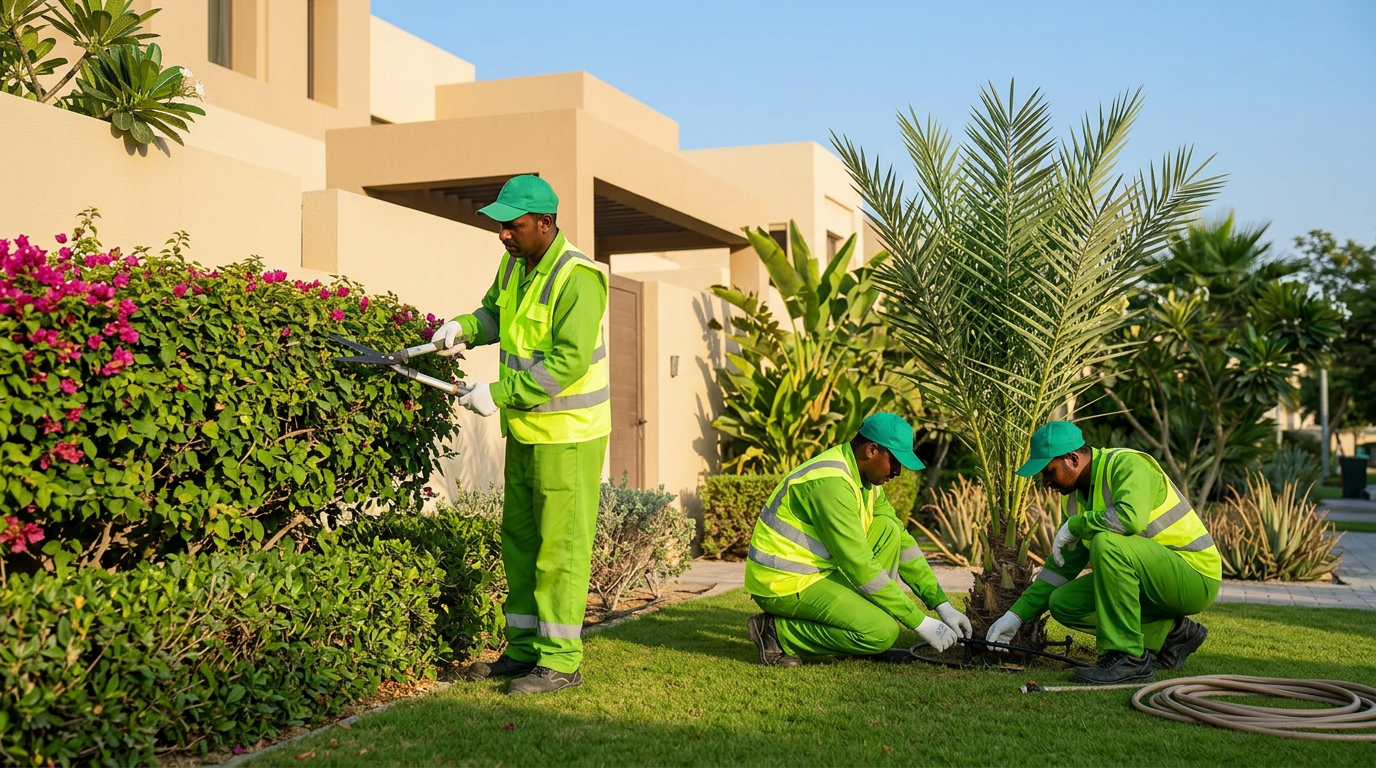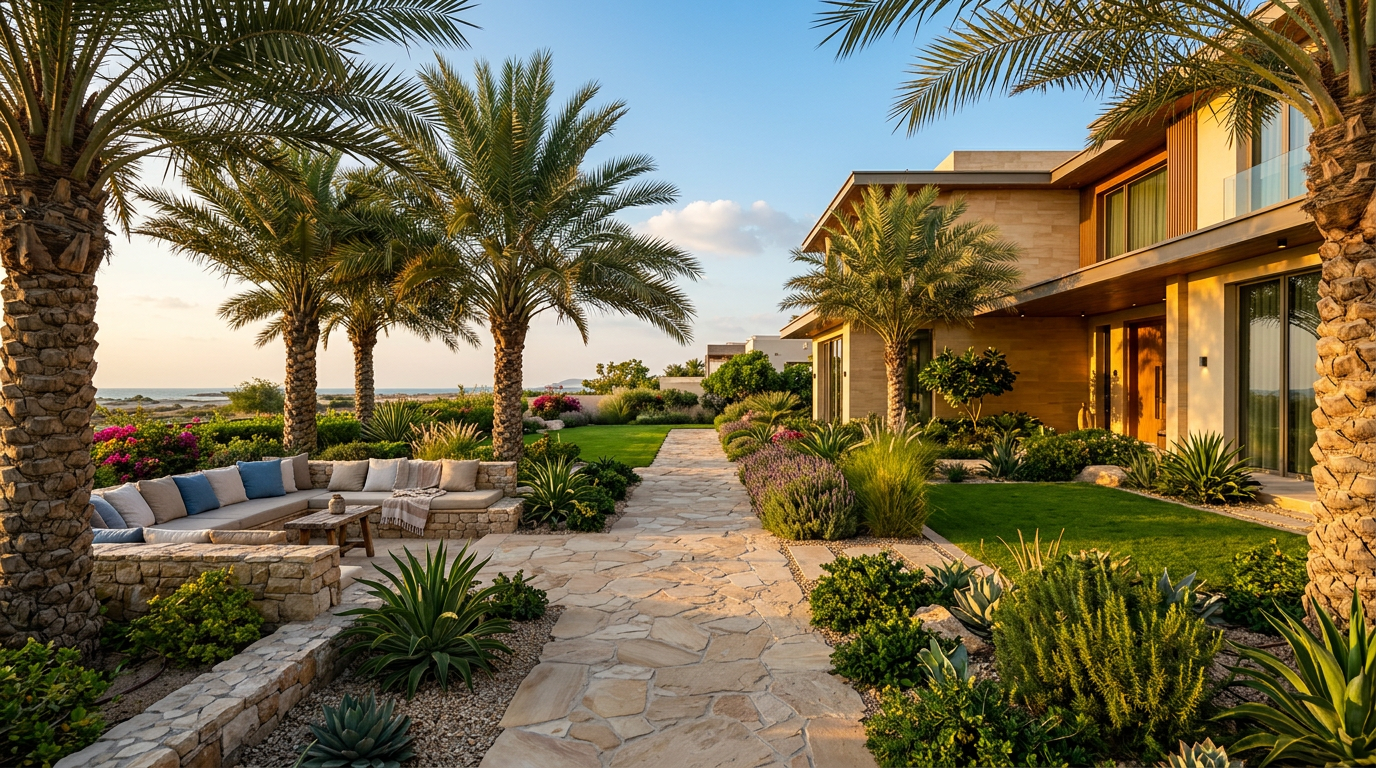
Every landscape starts with plants, yet plant supply is often the part of a project that gets the least planning. Owners agree a design, approve the irrigation layout and then discover, late in the programme, that the trees they wanted are not available in the right size, or that the shrubs delivered were raised somewhere very different from a Bahraini garden. Choosing a good plant nursery in Bahrain, and involving it early, avoids most of these problems.
This guide explains what a plant nursery can supply, how wholesale and retail supply differ, how to plan quantities and timing, and what to check when plants arrive on site. It is written for villa owners, developers, facilities managers and contractors who are planning a new landscape or a major replanting.
Why the source of your plants matters in Bahrain
Bahrain's conditions are demanding: long hot summers, high humidity, salty air, strong winds and soils that are often alkaline and free-draining. A plant that looked healthy in a catalogue can struggle here if it was grown in a very different climate and moved straight into a hot, exposed site.
Plants raised or acclimatised for the region generally settle in more reliably. They have already been exposed to local conditions, so the shift from nursery container to garden bed is less of a shock. That does not make planting risk-free, but it improves the odds. Our guide to heat- and salt-tolerant plants for Bahrain gardens explains how to match a species to its position. This article looks at the next question: once you know what you want, how do you source it well?
What a plant nursery can supply
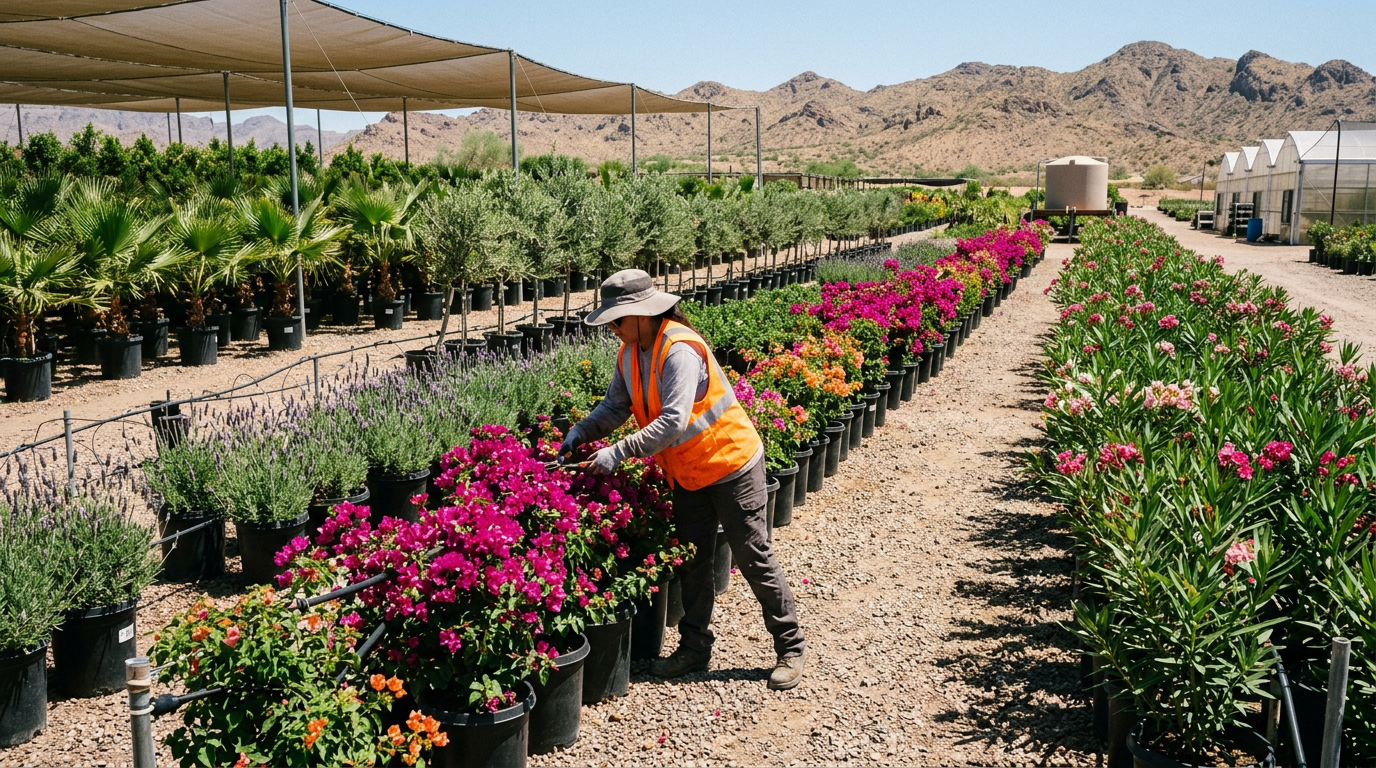
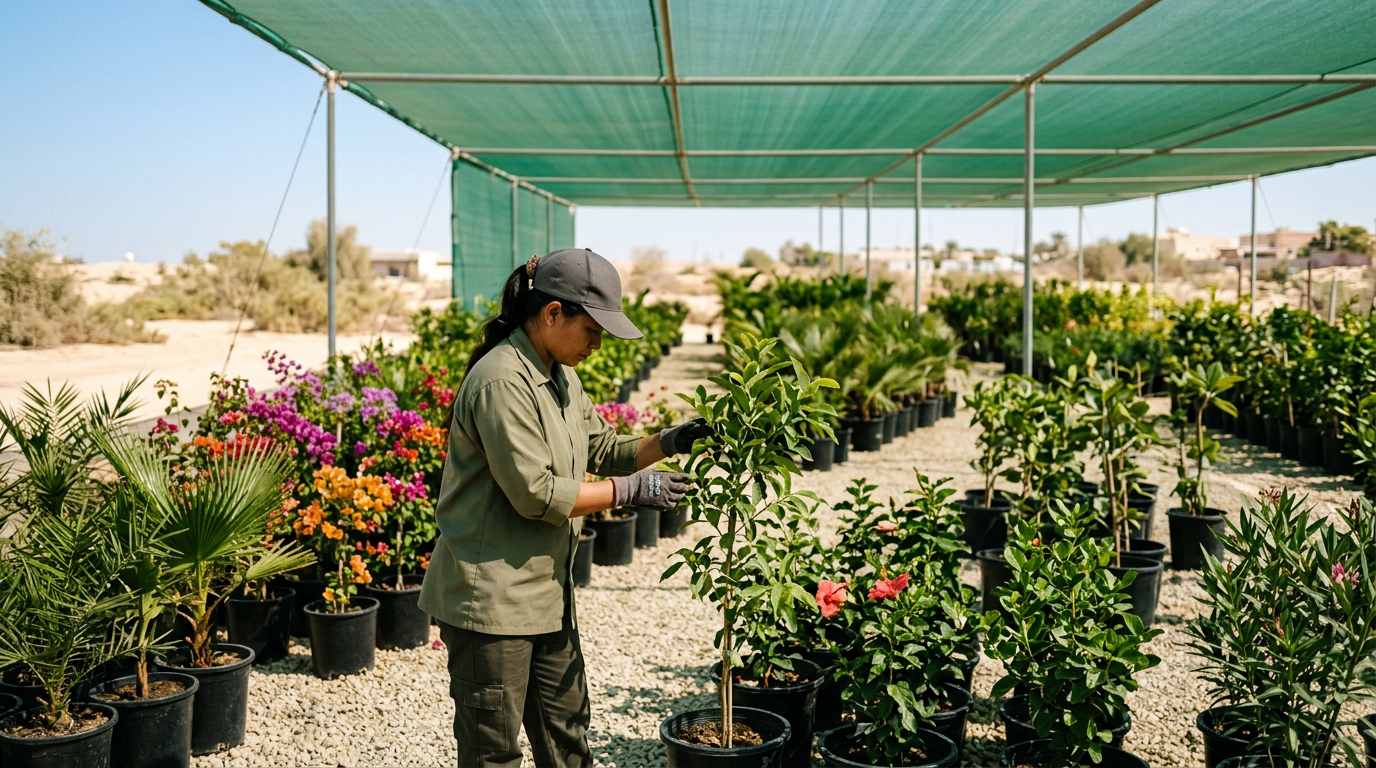
A full-service nursery is more than a shop. It is a source of stock, plus the horticultural knowledge to help you use it. The GFSS plant nursery offers a wide selection that includes:
- Ornamental trees for shade, structure and avenue planting.
- Shrubs for hedges, borders, screening and mass planting.
- Flowering plants for colour and seasonal interest.
- Seasonal varieties that can be changed through the year.
- Native and exotic species, with a focus on acclimatised flora suited to the region.
GFSS also provides expert horticultural advice alongside supply, and publishes a plant palette guide on the nursery service page so you can see the varieties we offer before you begin a design or a quotation.
Wholesale or retail supply: which do you need?
GFSS supplies plants on both a wholesale and a retail basis. The right route depends on the scale and type of your project.
| Project type | Typical supply need | What to discuss with the nursery |
|---|---|---|
| Private villa garden | A modest number of trees, shrubs and flowering plants | Species suited to the position, sizes, planting season |
| Residential compound | Repeated species across many plots, shared planting areas | Quantities, consistency of size and quality, staged delivery |
| School, hotel or commercial site | Mixed palette for entrances, courtyards and car parks | Low-maintenance choices, replacement supply, delivery dates |
| Public landscape or roadside planting | Large volumes of a limited palette | Wholesale supply, programme dates, substitutions |
Whichever route applies, the principle is the same: share your planting plan early, so the nursery can tell you what is readily available and what needs more lead time.
How to plan your plant supply, step by step
1. Start with the planting plan and site conditions
A plant list written without reference to the site is only a wish list. Before ordering, confirm for each planting area how much sun and shade it gets, how exposed it is to wind, what the soil is like and how it will be watered. A well-planned landscape design will already have resolved these questions, and your nursery can then check that each species suits its position.
2. Choose acclimatised species and keep the palette focused
A limited palette of well-suited plants usually performs better, and looks more coherent, than a long list of one-off varieties. Combine trees, shrubs and groundcovers in layers, use native or well-adapted species where you can, and reserve more delicate flowering plants for sheltered, well-irrigated spots.
3. Specify sizes and quantities clearly
State the size, form and quantity of every plant in writing. For trees, that means the container or root ball size and the height or trunk dimension you need. For shrubs and groundcovers, agree the spacing so quantities are calculated from the mature planting layout rather than guessed. Allowing a reasonable margin for replacements is sensible on larger projects, and it is better to agree it up front than to chase extra plants later.
4. Coordinate timing with irrigation and construction
Plants should arrive when the site is ready for them, not before. Paving, edging, soil preparation and irrigation installation should be complete or well advanced, so that plants can be watered the moment they are in the ground. Cooler months, particularly autumn and late winter, are generally more favourable for planting because the plants establish with less heat stress. Your nursery and landscaper can advise on timing for specific species.
What to check when plants arrive
Inspect plants before they are planted, not after. Look for:
- Healthy foliage. Good colour, no widespread scorching, wilting or signs of pests and disease.
- A sound root system. Roots should fill the container without circling tightly or being damaged, and the root ball should be firm and moist.
- A sturdy structure. Trees should have a sound trunk and a balanced canopy, not a single weak stem or heavily damaged branches.
- Correct species and size. Check delivered plants against your written order, including labels where provided.
- Consistency. Plants of the same species should be similar in size and condition, especially in hedges and avenues.
Reject or flag anything that does not meet the specification at delivery, while the nursery can still resolve it.
Handling, delivery and planting day
Even excellent plants can be damaged between nursery and site. A few simple habits help:
- Keep plants shaded and watered if they cannot be planted on the day they arrive.
- Lift and move plants by the container or root ball, never by the trunk or stem.
- Prepare planting holes before delivery so plants spend as little time out of the ground as possible.
- Water thoroughly after planting and make sure the irrigation is running to schedule.
- Support young trees where needed so that wind does not loosen the roots.
The first weeks after planting are when young plants are most vulnerable. A maintenance plan that follows the seasons helps them establish and protects your investment.
Plant supply for real projects in Bahrain
GFSS has worked on landscaping in the Kingdom of Bahrain since 1979, across private villas, public spaces and commercial sites. Examples on our projects pages include landscaping and irrigation works for eight villas at Jasra, landscape development of Hamad Town Interchanges 3 and 4 and landscaping and irrigation works at Bahrain International Investment Park. Because we handle landscaping, irrigation and plant supply together, plant selection, delivery and planting can be coordinated as one programme, and the same team can continue with ongoing maintenance after handover.
Talk to GFSS about plant supply for your project
Whether you need plants for a single villa garden or a larger landscape, the earlier you involve your nursery, the smoother your project is likely to run. Send us your planting plan or plant list, or simply tell us what you are planning, and our team will advise on suitable species, sizes and supply options. Visit our contact page to get in touch, or explore our plant nursery and landscaping services.
Frequently Asked Questions
Does GFSS supply plants to the public as well as to contractors?
Yes. The GFSS plant nursery offers both wholesale and retail supply, so it can serve private owners as well as contractors and developers.
Which plants suit Bahrain's climate?
It depends on the position. Acclimatised and well-adapted species generally establish more reliably, and the right choice depends on sun, wind, soil and irrigation. See our guide to plants for Bahrain gardens or ask the nursery team for advice.
When is the best time to plant in Bahrain?
Cooler months, particularly autumn and late winter, are generally more favourable because plants establish with less heat stress. Your landscaper can advise on timing for specific species.
How early should I contact a nursery before starting a landscape project?
As early as the planting plan allows. Availability and lead times vary by species and size, so sharing your plan early lets the nursery confirm what is ready and what needs more time.
Can I see which plants GFSS offers before I decide?
Yes. A plant palette guide is available to download from the plant nursery service page, and the team can advise on suitable alternatives.
Have a project in mind?
Our team is ready to help with landscaping, fencing, irrigation, and specialized surfacing across the Kingdom of Bahrain.
Contact Us