

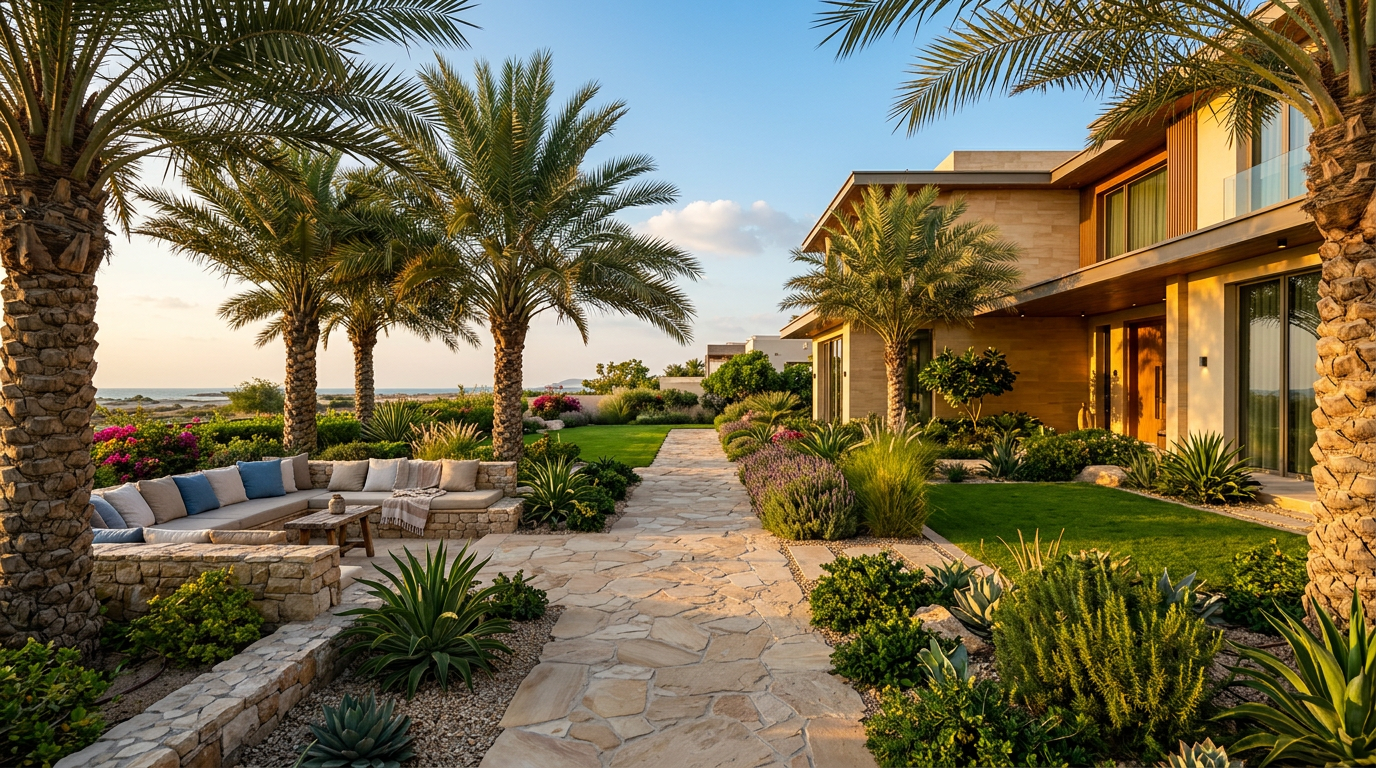
A garden in Bahrain can be a cool retreat, a welcoming arrival space or a practical extension of the home. But a design that looks beautiful on paper may struggle if it ignores intense summer heat, long dry periods, coastal exposure, dust and the way people actually use the site. The best starting point is not a plant list: it is a clear plan for shade, water, surfaces and maintenance.
Begin with the site, not the catalogue
Before choosing palms, flowers or paving, observe the garden at different times of day. Note where the sun falls in the morning and afternoon, where wind carries dust, which walls reflect heat, where water already collects and which areas people use most. A narrow side yard, a family lawn and a villa entrance have different priorities even when they share the same climate.
A useful brief answers four questions: Who will use the space? What should it make easier or more enjoyable? How much time can be given to upkeep? Which areas need to remain usable in the hottest months? For a property manager or school, include circulation, supervision, access and maintenance windows. For a villa, consider privacy, children’s play, pets, entertaining and views from inside the house.
A local landscaping company in Bahrain should translate those observations into a site-specific layout rather than applying a one-size-fits-all planting scheme. GFSS’s landscape service includes custom landscape design and architecture, hardscaping, softscaping and routine garden and lawn maintenance.
Work with heat, shade and coastal exposure
Bahrain’s climate includes very hot, humid summers and relatively little rain through much of the warmer season. That makes shade and irrigation fundamental design elements, not finishing touches. A shaded seating area can make outdoor space more inviting; shade for young plants can also help them establish, depending on species and planting conditions.
Coastal air and saline conditions can affect plant selection and exposed materials, but conditions vary from plot to plot. A garden near the coast, a site supplied by groundwater and an inland courtyard should not automatically receive the same planting prescription. Ask for soil and water conditions to be considered, especially if plants have repeatedly struggled or irrigation leaves visible deposits.
Dust and wind also influence layout. Use clear paths and practical edges that are easier to sweep, avoid creating awkward corners that collect debris, and place delicate features where they can be maintained. Shade structures should be planned with safe foundations, drainage and site conditions in mind, with engineering and local approvals checked for the specific project.
Balance hardscaping and softscaping
Hardscaping means the built elements: paths, terraces, retaining edges, steps, walls and seating. Softscaping covers living elements such as trees, shrubs, lawns and seasonal planting. Neither is automatically better. The right balance depends on how the garden will be used and cared for.
| Element | What it contributes | What to plan for |
|---|---|---|
| Hardscape | Access, seating, structure and durable activity areas | Heat underfoot, drainage, slip resistance and future repairs |
| Softscape | Shade, visual softness, habitat and seasonal interest | Establishment water, pruning, plant suitability and upkeep |
| Combined layout | A usable outdoor room with planting in the right places | Clear transitions, irrigation zones and maintenance access |
A practical garden often puts durable, easy-to-clean surfaces where people walk and gather, while reserving planting beds for areas where greenery has a purpose: screening, shade, framing a view or softening a boundary. Large expanses of paving may intensify reflected heat; too much lawn can raise the water and maintenance commitment. A measured mix can be more comfortable and easier to manage.
Choose planting for the conditions you have
Garden design in Bahrain benefits from matching plants to the actual site rather than choosing only by appearance. Consider expected mature size, root spread, sunlight, wind, soil drainage and the quality of available irrigation water. Ask a nursery specialist which varieties are suitable for the location and how they should be established. Even drought-tolerant choices need appropriate care while roots are establishing.
Use trees strategically. A canopy in the right place can shade seating or a sun-exposed wall, but a tree planted too close to a building, underground service or path can become a future maintenance problem. Layer shrubs and groundcovers to add depth, while keeping sightlines and access clear. If seasonal colour matters, use it selectively in beds that can be reached and maintained without disrupting the whole garden.
For villa landscaping in Bahrain, specify a realistic lawn area. Lawn can be the right choice for play or recreation, but it should be a deliberate use, not a default filler. Where a living lawn is not essential, consider planting beds, shaded courtyards, permeable areas or other appropriate surfaces.
Make water and maintenance part of the design
A landscape is only as sustainable as the care plan behind it. Divide planting into irrigation zones based on sun exposure and water needs; do not assume every bed and lawn should receive the same schedule. Drip irrigation may suit many planting beds, while a sprinkler system may be appropriate for lawn or other broad, even areas. The design should allow inspection, adjustment and repair.
Before work begins, agree who will maintain the garden and what routine care includes. A simple handover can identify irrigation controls, valve locations, seasonal checks, pruning needs and how to spot leaks or blocked emitters. Build access into the layout so maintenance teams can reach equipment without walking through planted beds.
Planning checklist
- Map sun, shade, wind, dust paths and existing drainage.
- Identify the garden’s main users and highest-priority activities.
- Check soil and irrigation-water conditions where plant performance is a concern.
- Decide which areas need shade, lawn, planting or durable paving.
- Group plants with similar water needs and separate irrigation zones.
- Confirm access for cleaning, pruning and system repairs.
- Set a maintenance level before finalising the planting palette.
A well-planned outdoor space should fit the property and the people who use it, not just the photograph. Contact GFSS for a landscaping consultation. GFSS is Bahrain-based, has 45+ years of experience and holds ISO 9001, ISO 14001 and ISO 45001 certifications. The team’s stated approach centres on experienced, client-centric delivery and its tagline is “Quality That is Guaranteed.”
Frequently Asked Questions
What should I ask a landscaping company in Bahrain before starting?
Ask how the proposed design responds to your site’s sun, soil, water, wind and intended use. Clarify planting choices, irrigation zones, surface materials, maintenance access, scope and handover arrangements before work begins.
Is hardscaping or softscaping better for a Bahrain villa?
Neither is universally better. Hardscape supports access and activity; softscape provides living greenery and can create shade. A balanced plan accounts for comfort, upkeep, water and how the household uses each area.
Can I have a green lawn in Bahrain?
A lawn may suit a garden where recreation or appearance justifies its water and maintenance needs. Size it intentionally, select an appropriate irrigation approach and plan for regular upkeep rather than assuming it will take care of itself.
When is the best time to landscape a garden?
Timing depends on the chosen plants, site conditions and project scope. Ask a local specialist to plan installation and establishment care around the season and the specific species.
References
Have a project in mind?
Our team is ready to help with landscaping, fencing, irrigation, and specialized surfacing across the Kingdom of Bahrain.
Contact Us