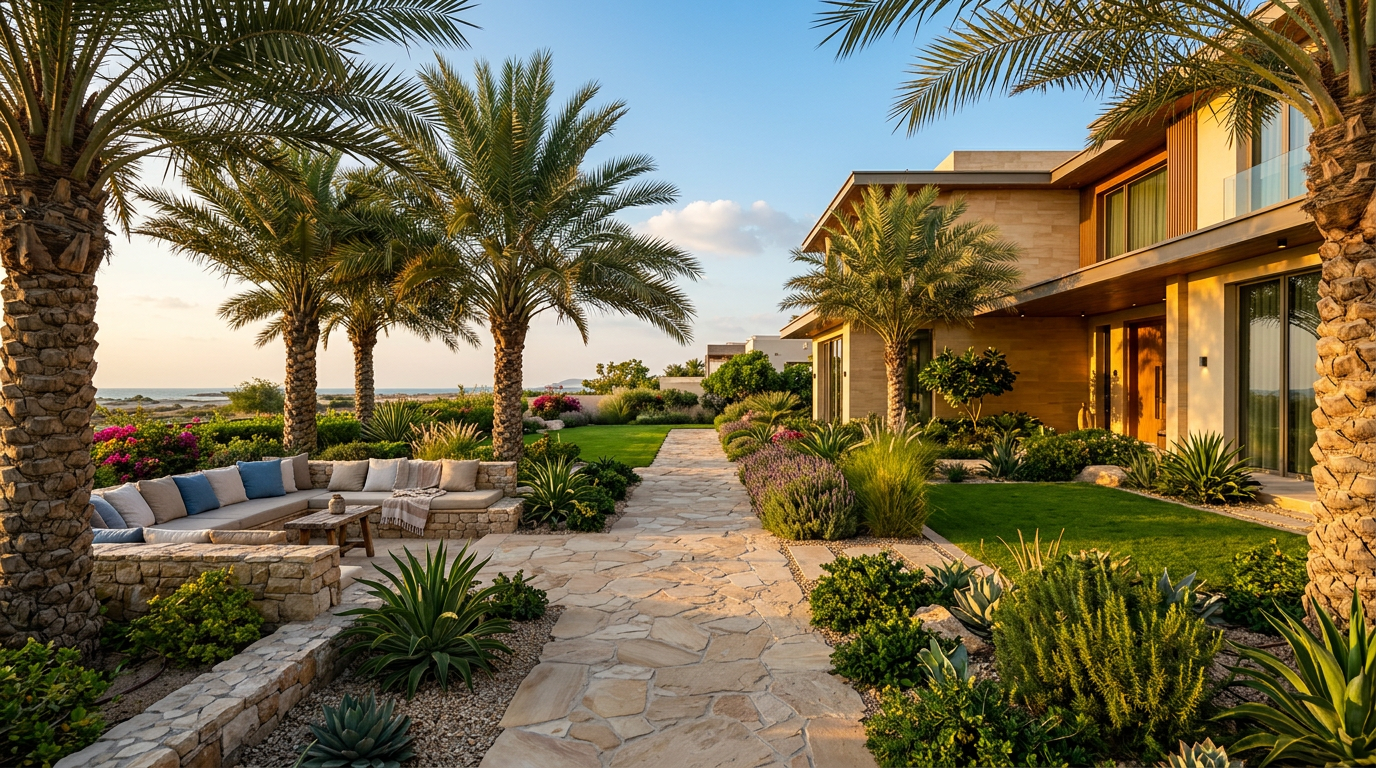

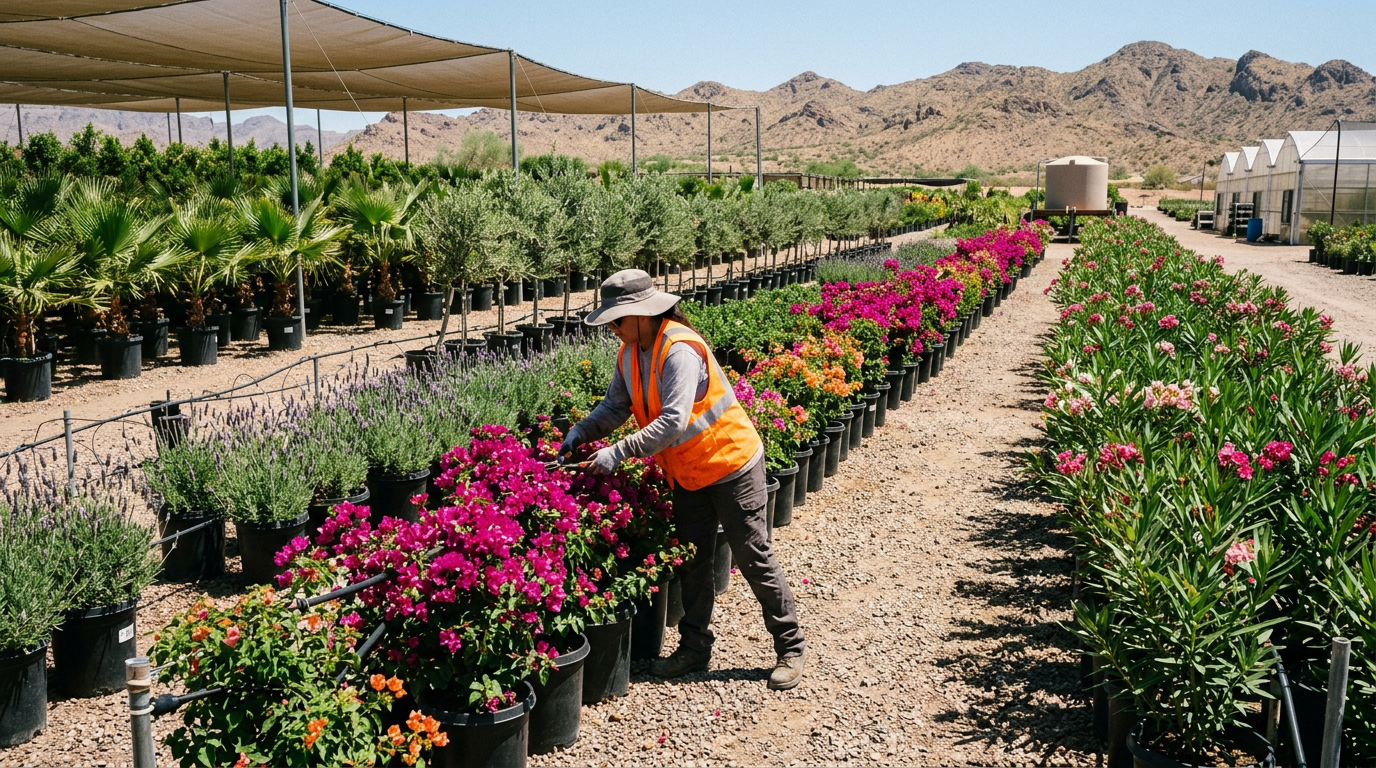
The most successful garden in Bahrain is not necessarily the one with the most exotic plant list. It is the one where each plant has a reasonable chance to thrive in its actual position: the right light, soil, water, airflow and room to mature. Heat, dry conditions and salinity can all matter, but they do not affect every site in the same way. A plant that performs well in one garden may struggle in another.
Start with the conditions beneath the leaves
Before selecting species, look beyond the plant's label. Note how much direct sun it receives, whether hot walls reflect heat, how exposed the site is to wind and coastal air, and whether water drains freely or remains around the roots. If plants have repeatedly failed, check irrigation coverage and soil conditions before buying replacements.
Salinity can be associated with soil, irrigation water or coastal exposure, but it should not be assumed to be identical across Bahrain. Where salt is a concern, ask a landscape or nursery specialist whether testing is appropriate. Avoid treating yellowing or leaf-edge burn as proof of salinity: heat stress, irregular watering, nutrient issues and root damage can show similar symptoms.
A site assessment also helps identify the intended function. A shade tree, privacy screen, border shrub and seasonal flower bed require different traits. Decide whether the priority is shade, screening, colour, low upkeep, fruit, or a mix before narrowing the selection. Consider the view from indoors as well as outdoors: a tree can frame a window, screen a boundary or cast useful afternoon shade, while a poorly placed specimen can block light or interfere with access. Check for underground services before selecting locations, and allow space for canopy growth so future pruning is not the only way to keep paths clear.
Think in layers: canopy, shrubs and ground level
A resilient planting plan uses structure as well as variety. Trees can provide shade and height; shrubs can define edges and soften walls; lower plants can cover soil and connect the beds. Leave enough room for mature growth and maintenance access. Crowding plants together for an instant full look can create avoidable pruning, competition and airflow issues later.
Choose trees according to mature canopy and root behaviour, not just the size of the nursery specimen. Place larger trees where their future shade is useful and where roots and branches can be managed safely. For hedges, choose a species and spacing that suit the screening goal, and confirm how regularly it must be clipped. Flowering and seasonal plants can add colour, but should be used where a caretaker can reach them and where their water needs fit the rest of the bed.
Species worth discussing with a specialist
A FAO reference on drought-resistant trees and shrubs for dry planting in Bahrain discusses species such as Prosopis cineraria, Salvadora persica, Ziziphus spina-christi, Tamarix aphylla and Parkinsonia aculeata among possible candidates. This is useful background, not a blanket recommendation for every garden. Availability, local suitability, mature size, maintenance, site conditions and the intended use must be checked before planting.
The same reference explains that “dry planting” includes an initial irrigation period. In other words, a plant described as drought-resistant should not be expected to establish without suitable watering. Establishment care is especially important for new trees and shrubs, and requirements vary by species and site.
| Planting role | What to assess | Questions for a nursery specialist |
|---|---|---|
| Shade tree | Canopy size, roots, wind exposure and distance to structures | How large does it grow, and what establishment care is needed? |
| Screen or hedge | Mature height, density, pruning and water needs | Will it suit the light and exposure along this boundary? |
| Flowering shrub | Seasonal interest, sun exposure and maintenance | Does it tolerate the site's soil and irrigation water? |
| Groundcover or low border | Spread, foot traffic and irrigation coverage | How quickly does it fill in, and how should it be contained? |
Match plants to the water plan
Do not plant species with very different water needs in one bed simply because their colours work together. Group plants by expected irrigation needs and exposure, then create zones that can be adjusted separately. A young tree may need more frequent attention while it establishes than the surrounding mature planting. Containers often dry differently from in-ground beds and may require separate care.
Use mulch or another appropriate soil-cover strategy where suitable to reduce exposed soil and make beds easier to maintain. Avoid piling material against stems or trunks, and use a site-appropriate product. A well-designed irrigation system should distribute water to the root zones without routinely wetting paths and hard surfaces.
Water conservation should not be confused with leaving plants to struggle. A smaller, well-planned planting palette with appropriate establishment care may be easier to maintain than a crowded garden filled with water-demanding species that are not suited to the location.
What to ask a plant nursery in Bahrain
A plant nursery in Bahrain can help confirm what is available and which choices fit the intended planting conditions. Take photographs of the site, note sun exposure and irrigation details, and be ready to explain what the plant needs to do. Ask for the scientific or clear common name so that varieties are not confused.
Plant-selection checklist
- Confirm the plant's mature height, spread and root considerations.
- Ask whether it suits the site's sun, wind and coastal exposure.
- Discuss soil drainage and irrigation-water quality if these are concerns.
- Check the water and care needed during establishment and after maturity.
- Group plants with similar irrigation needs.
- Confirm pruning, litter, thorns, fruit drop or other relevant upkeep.
- Buy healthy stock and ask how to handle and plant it correctly.
The best plant choice also depends on its surroundings. A species used in a broad public landscape may not be right beside a small courtyard, children's play area or underground service. Consider safety, shade patterns, sightlines and access alongside the plant's tolerance.
A thoughtful planting plan can bring shade, structure and seasonal interest without relying on guesswork. Contact GFSS to discuss landscape planting and nursery options. GFSS has 45+ years of experience and holds ISO 9001, ISO 14001 and ISO 45001 certifications.
Frequently Asked Questions
Which trees grow well in Bahrain?
The answer depends on site and purpose. A FAO reference discussing Bahrain includes species such as Prosopis cineraria, Salvadora persica, Ziziphus spina-christi, Tamarix aphylla and Parkinsonia aculeata as candidates for dry conditions. Confirm suitability, availability and maintenance with a local specialist before choosing.
Are drought-tolerant plants maintenance-free?
No. Drought tolerance does not eliminate establishment watering, pruning, pest checks or irrigation maintenance. Requirements depend on species, size, soil and exposure.
Can salt-tolerant plants handle any saline soil or water?
No single label guarantees performance in every level or type of salinity. Soil and water conditions differ, so ask for an assessment if salt is suspected and choose plants accordingly.
Should I choose native plants for my garden?
Native or regionally adapted plants can be worth considering, but suitability still depends on the site, design goal, availability and care requirements. Ask a nursery specialist to compare practical options for your specific conditions.
References
Have a project in mind?
Our team is ready to help with landscaping, fencing, irrigation, and specialized surfacing across the Kingdom of Bahrain.
Contact Us