

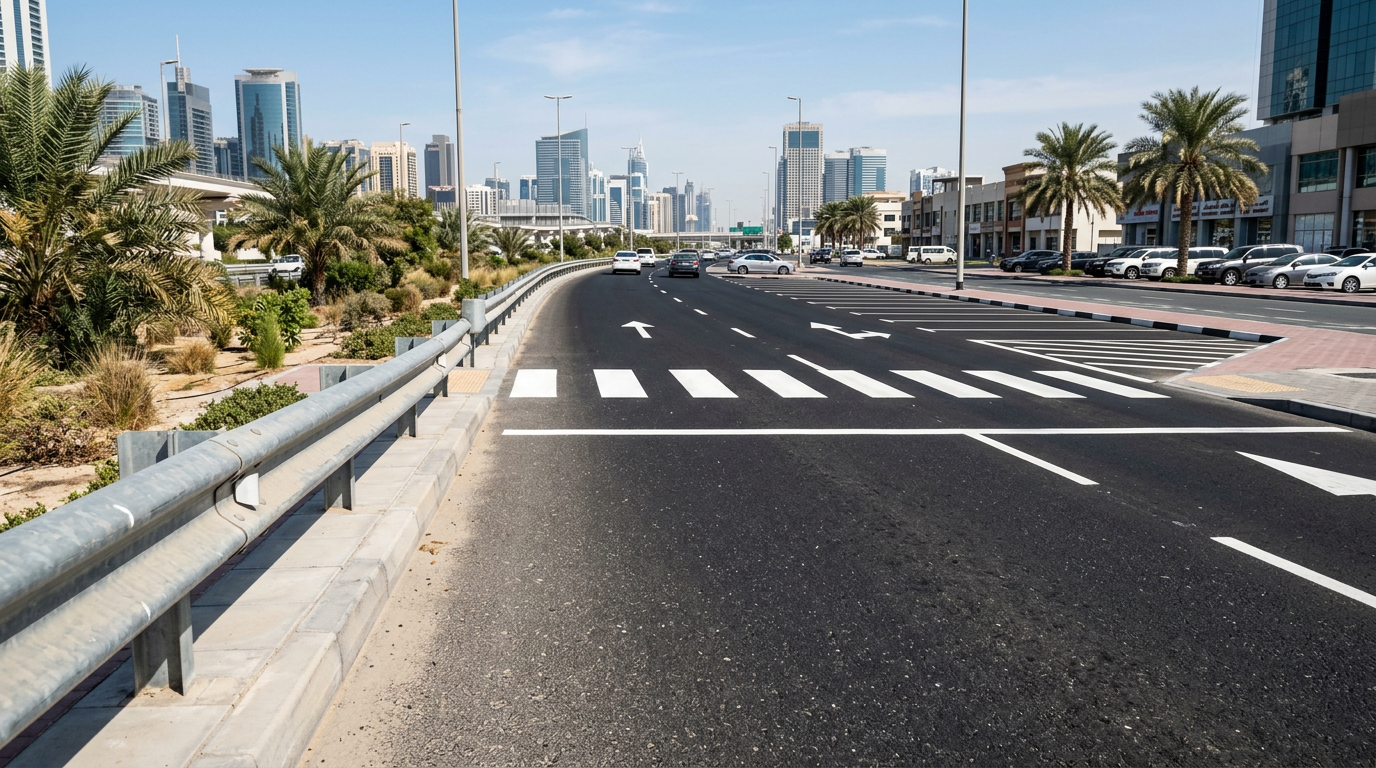
On a development or industrial site, safety is shaped by many small decisions: where vehicles enter, which routes pedestrians follow, where a driver sees a crossing, and how a loading area is separated from general circulation. A barrier, fence or painted line works best when it is part of a coordinated site plan rather than an isolated item.
For project owners considering a crash barrier in Bahrain, begin with the specific hazard, the likely users and the authority-approved design. Road restraint systems are engineered safety equipment; selecting one by appearance or a generic product description is not enough. Road marking, pedestrian fencing and parking lot striping need the same attention to site purpose and applicable requirements.
1. Map movements and conflicts first
Before selecting products, map how people and vehicles use the site at peak periods and during deliveries, maintenance and emergencies. Look at entrances, turning areas, crossings, kerbs, blind corners, loading zones, parking aisles, ramps and pedestrian destinations. Mark where a vehicle could leave its intended path or where a pedestrian may cross a vehicle route.
A useful site review asks:
- Who uses each route: staff, visitors, pupils, residents, delivery drivers or service teams?
- Which movements happen at the same time, and where might they cross?
- Where are speed, visibility, reversing or queuing concerns?
- Which routes need to remain clear for emergency access?
- What drawings, specifications and approvals govern the work?
A traffic-management plan and site walk-through can help the project team decide where a physical barrier, clear line marking or a change to the layout is appropriate. Product selection should follow that assessment.
2. What crash barriers are for
A crash barrier or road restraint system is intended to manage a defined vehicle hazard when the project design calls for one. Its use, location, length, end treatment, transitions and foundations must be considered as a system. The right selection depends on the design context and required performance, not merely on whether a barrier looks robust.
For a Bahrain development, road owner or project engineer should confirm the applicable specification and approvals before procurement. Do not substitute a general-purpose fence or handrail for a specified road restraint system. Likewise, do not assume that a vehicle barrier automatically protects pedestrians: the risks and design functions differ.
GFSS lists crash barriers among its fencing and barrier services. A project team can use a consultation to clarify the site conditions and scope, while the responsible designer confirms the technical selection and required approvals.
3. Pedestrian fencing: guide movement, do not just block it
Pedestrian fences can define walkways, guide people towards a crossing, discourage shortcuts through vehicle areas and protect a boundary. Their placement should make the safe route obvious and accessible. A fence that channels people towards a poor crossing point, blocks a required exit or creates a new visibility problem can work against the site plan.
At schools, compounds and public facilities, consider children, wheelchair users, visitors unfamiliar with the layout and people moving in groups. Keep gates, breaks and crossing points intentional. Separate pedestrian routes from vehicle manoeuvres where the design requires it, and make sure the fence connects coherently to kerbs, gates and other site features.
4. Road markings and parking lot striping
Road markings communicate how a paved area is meant to be used. On public roads, markings form part of a regulated traffic-control environment. Within a private car park or site, painted lines can help organise bays, travel lanes, pedestrian paths, loading zones, accessible spaces and restricted areas. The exact layout, colours, symbols and materials must follow project specifications and any applicable authority requirements.
GFSS describes its road-marking service as including highway and street lining, parking-lot striping, pedestrian crossing zones and industrial warehouse marking. Before work begins, establish the surface condition, preparation method, marking layout, material system, curing or reopening plan and any traffic-management arrangements. Do not select a marking material solely by colour or unit rate; confirm its suitability for the pavement and intended use with the project specification.
5. Industrial and warehouse floor marking
Inside a warehouse or industrial site, floor markings can support route definition and operational organisation, but the paint alone cannot replace safe working procedures, equipment controls or a well-planned layout. Identify pedestrian aisles, vehicle routes, storage zones, work areas and keep-clear spaces with the site manager and safety team.
A marking plan should align with real operations: pallet locations, turning clearances, loading patterns, temporary work areas and evacuation routes. Establish how damaged or obscured markings will be identified and renewed. If the site changes its storage or workflow, reassess the markings rather than simply repainting the old pattern.
6. Bring the elements together
Think of barriers, fences and markings as complementary tools:
| Element | Typical role | Questions to resolve |
|---|---|---|
| Crash barrier | Address a defined vehicle-restraint need | What design, approvals and complete system are specified? |
| Pedestrian fence | Guide or separate pedestrian movement | Does it lead people to safe, accessible routes and crossings? |
| Road marking | Communicate road movement and control | Which road authority and project requirements apply? |
| Parking striping | Organise bays and circulation | Does the layout reflect turning, access and pedestrian routes? |
| Warehouse marking | Clarify internal operating zones | Does the pattern match current procedures and equipment routes? |
Coordinate these elements with lighting, signs, kerbs, gates, drainage and the construction sequence. Review the finished site in daylight and, where relevant, at night or during the operating conditions that matter. Handover information should identify the layout and the maintenance responsibility.
7. Confirm Bahrain requirements before work
Specifications and approvals can vary with road ownership, project type and location. Confirm current requirements with the project engineer and the relevant Bahrain authority, including the Ministry of Works or traffic directorate where applicable. The project team should verify approved drawings, traffic management, materials and inspection requirements before installation. This article is a planning guide, not a substitute for a site-specific design or authority approval.
Coordinate your site safety scope with GFSS
GFSS provides road marking for highways, streets, car parks, pedestrian crossing zones and industrial warehouse areas, alongside fencing and crash-barrier services. For an initial discussion, share the site plan, intended use, known hazards and project specification; the responsible design team can then confirm the applicable requirements. Contact GFSS to discuss the scope.
Frequently Asked Questions
What is the difference between a crash barrier and a pedestrian fence?
A crash barrier is intended to address a defined vehicle-restraint need. A pedestrian fence guides or separates people. Their design purposes differ, and one should not be used in place of the other without design approval.
What should be included in a parking lot striping plan?
Show bays, driving aisles, pedestrian paths, crossings, accessible spaces, loading or service zones, restricted areas and relevant signs. Confirm the plan against the site design and current authority requirements.
Can warehouse floor marking make an industrial site safe?
Markings can help communicate routes and work zones, but safety also depends on layout, equipment, procedures, training and maintenance. Coordinate the marking plan with site operations.
Who confirms the road-marking requirements in Bahrain?
The project's responsible designer and relevant road owner or authority should confirm current requirements for the location and project. Do not rely on a generic standard reference without checking its local applicability.
Have a project in mind?
Our team is ready to help with landscaping, fencing, irrigation, and specialized surfacing across the Kingdom of Bahrain.
Contact Us